Week Two Assignment
For this week’s assignment we will be comparing two different cultures named the Zulu population and the Andean Indians tribes. These two cultures are similar and yet different in many ways, from population to adaptation to more. We will discuss and analyze these differences throughout this post.
POPULATION
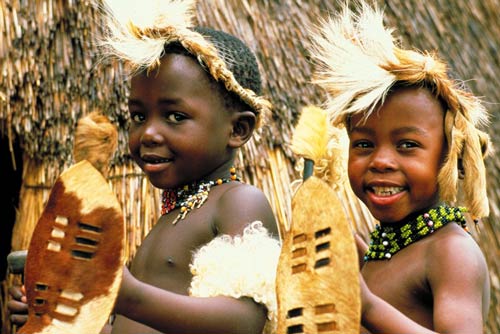
Starting with population, the Zulu people are from South Africa and make up 1/5 of the whole population in South Africa. While the region where the Zulu tribes lived were well-watered, there were also extremely high temperatures and high rainfall influenced how crops grew in these harsh conditions. It is said that the average temperature within South America can range from about 80 degrees Fahrenheit in the summer to 50 degrees Fahrenheit in the winter. These changes in weather can affect the crops and force tribes like the Zulu to adapt and survive.

This is where the Zulu population is located in South Africa.
Within the Andean population, they live in the high climate in the Andes mountains located in South America. While you may think the mountains are a cold and impossible place to live, the Andean population found a way. The land where they lived was very diverse and so were the conditions. In this region, you had rain forests, coastal deserts and more making each small area its own mini ecosystem with its own climates. For example, in the high plains the climate could range from summer days to nights as cold as winter within a span of a few hours. This consistency can be said for almost all these small ecosystems; however, the dramatic change of the climate can vary from location to location. The higher elevation you go, the colder it gets and vice versa. This climate also showed many challenges to this population that they also adapted with.
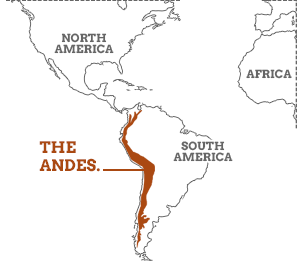 |
| This is where the Andean population is located within South America. |
PHYSICAL ADAPTION
The Zulu people had hardships with their climate that made them adapt in different ways such as physically. Due to the extremely warm climates, their skin became darker with melanin which is a pigment in the skin formed as protection from the harsh rays from the sun. With more melanin in skin, it reduces the chances of skin diseases such as skin cancer and more. These adaptations also appeared culturally as well to make sure they survive these climates.
The Andean population had also adapted physically. While the Zulu had adaptations to their skin alone, the Andean population has adapted by the way they breathe. Many hikers would tell you that on mountains, the air gets thinner the higher you get which makes it harder to breathe. The Andean people have adapted in a way that allows them to breathe more easily in harsh conditions such as those up in the mountains. Their body has adapted to carry more oxygen in their red blood cells which is less likely to lead to hypoxia. We see this change physically which is why they have a more distinct redness to their skin compared to other tribes and cultures in South America. This allows their adaptation to successfully breathe more and avoid sickness such as nausea, passing out and even in worse cases, death.

CULTURAL ADAPTATIONS
The Zulu population has adapted culturally as well as physically to survive. The adaptations can appear in the way they handle their crops or even their clothing. In their culture as a means of survival, they created this system called “ukusisa” where rich people would loan their cattle to poorer people so that poor people could have the advantages of cattle such as milk while the rich people have people to properly take care of their cattle for them. We also see cultural changes in their clothing. Due to the extreme heat, those within this culture would wear shorter clothing to not overheat from the hot climates.

The Andean population has also adapted culturally to the harsher climates they have had to face. With their food supply, they use the frigid cold to freeze-dry their meats, fish and other foods to preserve it. They have huge warehouses filled with this food so the population can survive for long compared to their food supply getting bad and there is no more food for the winter. They also have clothing made from llama and alpaca wool/cotton to keep warm.

RACE
Race is defined as “a category of humankind that shares certain distinctive physical traits.” There are five general descriptions of race within these categories which are African American/ Black, Asian, White, Native American, or Pacific Islander.
For the Zulu tribe, they would be put in the category of Black or African American due to their distinct features of dark pigmentation.
For the Andean population, they would be categorized as Native American. This is due to them being an indigenous tribe specific to South America.
ADAPTATION VS RACE
It is easy to put each of these groups into a specific category based on specific regions or skin color. However, each culture that resigns in different areas should be described as such. Categories such as race are too generalized to describe such specific cultures such as the Zulu and Andean populations. When you describe groups of people more than just their race but rather about their adaptations and how their cultures struggle and survive, it gives more explanation that general categories can ever do. I think that explaining aspects of the culture is more beneficial to anthropologists because it allows anthropologists to actually study aspects of the culture rather than have racial bias.
Sources:
Nicely presented!
ReplyDeleteZulu: Careful about confusing "weather" or "climate" with "environment". The guidelines ask about *environment* which certainly includes climatic issues, but also things like solar radiation, altitude, water access and native flora and fauna. All can impact a populations physical and cultural traits.
Physical traits: Yes, darker skin color is an adaptation but it doesn't have anything to do with temperature. Populations in cold climates also develop darker skin tones. This is connected with the stress of solar radiation, not heat stress.
Cultural trait: The practice of more minimal clothing is an adaptation to heat stress, though it is only possible because they also possess darker skin as an adaptation to solar radiation stress, correct? Are the other practices you describe related to environmental stresses or are those social practices?
Race: Yes on 'black' but does "African American" work? Are these Americans? We call "black" in the US "African Americans" because they are Americans who originated on the African continent. Zulus still ARE on the African continent.
Andean: Again, watch the emphasis on "climate". This is about *environment*. There are multiple stresses that influence the physical and cultural traits of this population, namely cold stress, solar radiation stress and high altitude stress, all of which should be identified here for this discussion.
Physical adaptation: Yes, there are two ways that the Andeans have adapted to the high altitude stress: (a) A larger lung capacity and (b) more red blood cells and hemoglobin. This helps their bodies transport oxygen more efficiently and quickly to the body's tissues. The red skin that you note is just an indicator that the capillaries in their skin are *dilated*. This isn't really an indicator of oxygen content. This is a way of releasing excess heat from the body through the skin's surface OR alternately sign that the body is releasing blood to the tissues so that they can be oxygenated. You see this in cold climates and it is called a "hunting response", where the body alternates between vasoconstriction (to retain heat) and vasodilation (to supply the surface tissues with oxygen to avoid frostbite).
Race: "Native American" could work, but the regular term is indigenous Indian. Better not to identify a specific geographical area.
Summary: I agree with your conclusions here, but there is an important question that still needs to be answered on the topic of "explanatory power". The advantage of the environmental adaptive approach is that it allows you to explain the traits, both physical and cultural, in terms of how and why they arose. As you point out, this is so much more useful than straight descriptions, but is it at all possible to use race to gain these explanations? If not, why not?
Race is not based in biology but is a social construct, based in beliefs and preconceptions, and used only to categorize humans into groups based upon external physical features, much like organizing a box of crayons by color. Race does not *cause* adaptations like environmental stress do, and without that causal relationship, you can't use race to explain adaptations. Race has no explanatory value over human variation.
Cultural traits:
I realized I forgot to review your section on Cultural traits for the Andeans. Both the practice freeze-drying food and raising llamas (or alpacas) are good examples of cultural adaptations to an environmental stress.
DeleteHey Kady!
ReplyDeleteYour post was very informative and packed with information. I loved how you easily distinguished both populations as it was really easy to read. It's very interesting how culturally adapting to an environment means using it to your own benefit! Just like how you mentioned that the Andean Indians use the frost from the cold temperatures from the mountains to freeze-dry their meat and perishables. Both are culturally different and live in different places thus how they adapt is different but it's interesting nonetheless to learn more about them and gather information to expand our knowledge.
Hi Kady,
ReplyDeleteAt first, when reading about the environment the Andeans lived, I was confused about "high" climate, because I could've sworn mountains meant it would be colder. But now I see you meant high altitude. Of course due to the large spread that is the Andes mountains, you are right about the weather and climate varying drastically throughout the continent as the Andes spreads across multiple countries. With that said, the Andean natives are very versatile and know how to adapt to their climates no matter the month or season that it currently is.
Hi Kady, this was very informative and organized. It's always interesting to see how different cultures adapt culturally or physically. I especially found it fascinating when I learned that the Andean adapted to the high altitude of the Andes Mountains with their red blood cells being able to carry more oxygen.
ReplyDeleteKady,
ReplyDeleteI agree that race is far too complex to be generalized. Even though you may share similarities to a certain group of people doesn't mean you share the same cultural or environmental similarities as well.